

Anyone who has spent quality time working in or simply studying India’s construction space will notice the reverence given to material specifications. Every year, we pour thousands of rupees to ensure the materials being procured meet the highest quality standards. These materials go through rigorous tests just to make sure we have a project that complies with BIS codes.
Why is it then that construction materials that pass all of these lab tests ultimately fall apart during actual on-site application? Peeling plaster, buildings with visible hairline cracks, and corroded steel are all more common than one would hope across Indian job sites.
When these issues arise, there is a lot of blame to go around, with suppliers pointing fingers at contractors and vice versa.
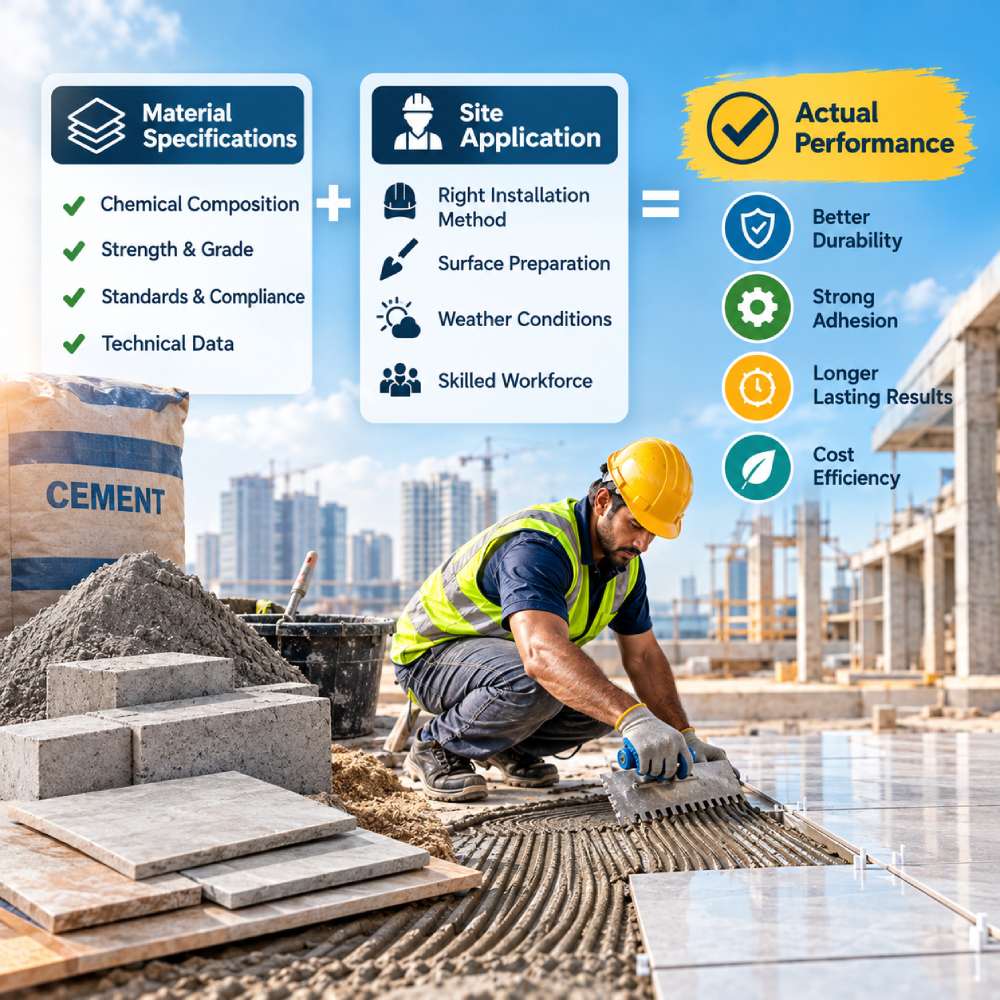
However, the wise among us should recognize that the real issue may lie in our unwavering focus on material specifications rather than real-world application. The true performance of a material can only be understood when it is processed—whether cured, mixed, stored, or handled under actual site conditions. This is why choosing reliable Tile Adhesive Suppliers in India is essential to ensuring that the material performs as expected in practical applications.
The Contrast between Testing in Labs vs. Indian Weather
If we had one word to accurately describe the conditions within a lab, then it would be “pristine”. Laboratories where cement and other materials undergo testing usually harbor an environment that one would call neat, for the lack of a better word. They operate in ambient temperatures that hover around 26-28 degrees Celsius.
Humidity is controlled, and you’ll be lucky to notice even a speck of dust. Now, juxtapose that with an actual Indian construction site and the obvious flaw of obsessing over material specifications becomes even more apparent.
Indian construction sites must operate under a volatile environment. Temperatures during the peak of summer can touch 50 degrees Celsius in some parts of the country. You can only imagine what would happen to concrete that’s laid out in such extreme weather conditions. Hot summers will naturally result in water evaporating briskly, which would, in turn, trigger rapid setting and shrinkage.
Hot summers aren’t your only concern, though, as India is also known for its relentless monsoons. You’ll find waterproofing compounds fail to create a strong bond without proper drying during heavy downpours, especially when humidity levels touch 80%.
Suffice it to say, even though a material was certified in a lab, you’ll only know its performance when its pit against India’s harsh weather conditions.
The Importance of Surface Prep
Besides weather, another thing that influences a building material’s performance is the surface it eventually comes in contact with. You may have a product that came out of the lab exhibiting phenomenal bonding strength. This does not mean you’ll have excellent results regardless of a surface’s condition.
It is imperative to have a surface that’s clean and free from dust, dirt, and grime for a tile adhesive to bond properly. A filthy substrate will result in the adhesive failing to establish a stronger bond. This same rule applies to other products like primers, plasters, and grouts.
A high-end, state-of-the-art product will never compensate for a surface that’s unstable or riddled with contaminants.
Proper Mixing is Non-Negotiable
Most building materials you’ll procure will come in concentrated form. You’ll need to mix them before they are ready for application. It is recommended to follow the manufacturer’s guidance on the method to employ, and the water-to-material ratio you’ll need to comply with. Only then can you expect the desired performance.
Too much water will make the material way too pervasive while also affecting its overall consistency, strength, and shrinkage. On the other hand, an improper material-to-water ratio will result in inconsistent output.
There is a good reason why most manufacturers lay out application instructions on the packages of their adhesive, primer, or grout-related products. It is recommended to stick to these instructions to ensure a material can realize the full potential of its specifications.
Pay Heed to Curing and Drying
Once applied, you’ll need to give the material some space to exhibit its intended benefits. This means giving it enough time to cure or dry. Sufficient curing and drying leeway will ensure the material remains stable and performs well in terms of strength.
The material mustn’t be exposed to heat, water, or traffic before it is completely set. A manufacturer will mention the curing and drying time recommended for their product on the packaging. We would advise you to adhere to those recommendations to get the desired results.
How a Material is Stored Matters
While we discuss on-site applications, one should not ignore the importance of storage. Building materials must be handled with great care while in storage. Not doing so will only hinder the material’s ultimate effectiveness.
For instance, it is recommended to keep concentrated materials away from water or excessive humidity, lest they develop lumps. It is also important to consider temperature and exposure to sunlight when considering the storage of liquid materials. One should note down a product’s shelf life. Using a product that’s way past its shelf life can have disastrous consequences on a building project.
Good storage practices ensure the product arrives on site in optimal condition.
Do Not Underestimate the Need for Good Workmanship
Building materials don’t have a life of their own. They won’t grow legs, jump out of their packaging, and apply themselves as soon as they are dropped on site. Their application, more importantly, how well they are applied, will largely depend on the skills of people at work.
You can have two people using the same product and have two completely different outcomes. Everything from incorrect mixing to insufficient coverage and poor surface-prep are all issues you can attribute to poor workmanship.
Skilled workmanship, on the other hand, will entail someone who follows instruction guidelines to the last detail with extreme precision. No matter how great the material, its potential can only be realized when it is handled properly by those in charge.
Conclusion
It should be obvious to anyone reading by now that material specification, although important, won’t determine the integrity of a project on its own. Specifications can help us pick the right tool for our projects. Once that product is delivered to the site, its performance will depend on how it is handled.
Proper surface preparation, mixing, curing, understanding weather conditions, and storing can all help you avoid costly mistakes. A seasoned architect or builder will give equal importance to both material specification and site application.
Simply choosing the right material isn’t enough; using it the right way is what ultimately matters the most.
When it comes to choosing the right materials, we at Magnus Ventures can cover you on that front. We have a sizable catalog of eco-friendly building materials that can contribute to the integrity of your construction project.
We suggest you give our catalog a glance to learn what we have in store for you.