
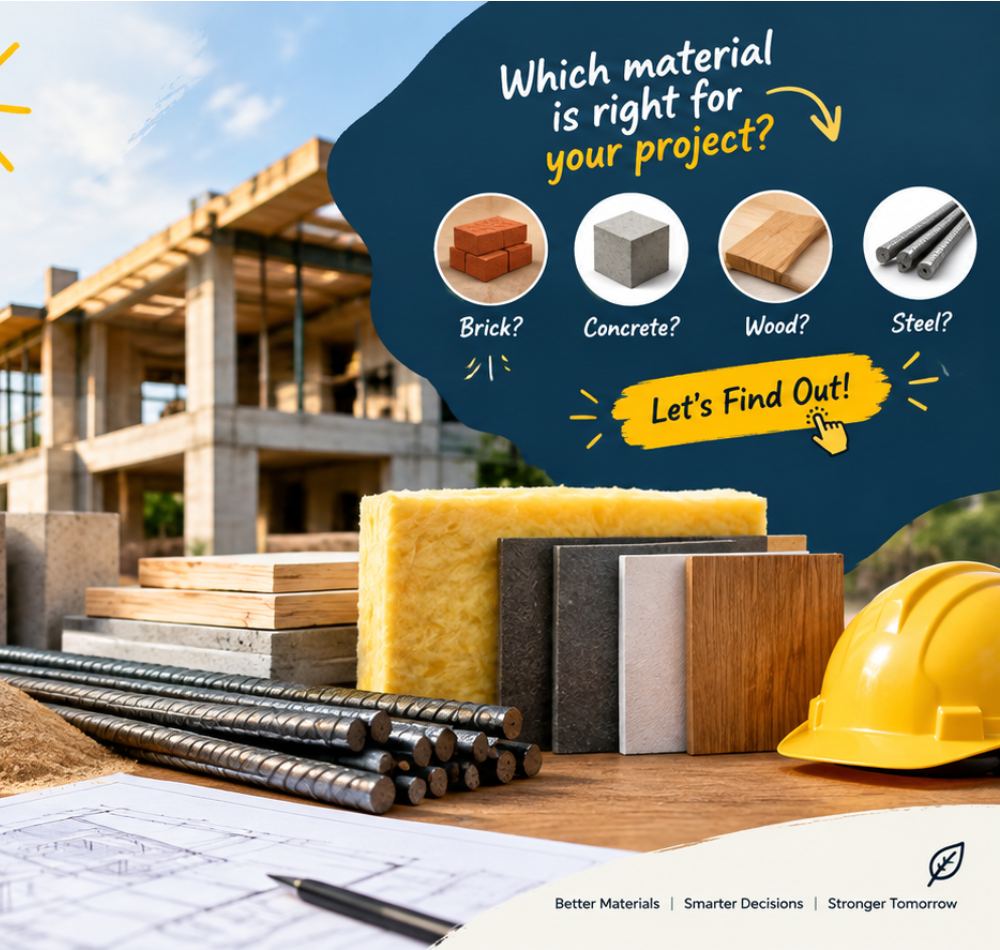
Someone wise once said that construction begins even before a single brick is laid. We would go a step further and say that true work on construction, whether it is for a residential project or a commercial one, only kicks off when the people involved start deliberating on material acquisition.
Your building’s long-term integrity will largely depend on the quality of materials you choose, making the selection of construction materials a decision that requires careful planning and due diligence. You’ll need to make several crucial choices, including working with reliable construction product distributors, as selecting building materials isn’t as simple as walking into a market and picking the first item that catches your eye.
Instead, you’ll need to get into a room with your fellow stakeholders and decide what kind of materials to choose, where to use them, assess their on-site performance, and ultimately predict how these materials will perform 10 or even 20 years down the line.
Suffice it to say, choosing the right construction material makes a world of difference.
Why You Must Be Careful When Picking Building Materials
What is a building material? If you think about it, they are building blocks that’ll influence a project’s performance over time.
Picking the right material would entail
- Everlasting durability
- Reduced maintenance overhead
- Stronger structure.
Basically, you can expect very few problems, if any, when you’ve picked the right material for the job.
In contrast, you are in for a rude awakening when the material at work is simply subpar.
- Weak adhesion
- Visible cracks
- Moisture exposure
These are all issues that’ll feed on your project until it is reduced to a husk. The occurrence of these issues means you’ll need to revise certain aspects of the construction, which will only result in the cost shooting upwards beyond control.
I think people make a terrible mistake when they only look at the price and specifications mentioned on the package before buying the material. Common wisdom would dictate looking beyond what meets the eye.
So, choose a material after understanding where and how it will be used.
Understanding a Project’s Requirements is critical
Buying materials even before you’ve figured out their application is a grave mistake that we’ve seen happen on so many job sites, thus resulting in devastating consequences.
In fact, the right thing to do would be to first understand your project’s requirements. You really don’t need to be an expert to assess these requirements. All you need to do is ask a few questions.
Where will the acquired material be used? Will it be used indoors or outdoors? Is there a risk of moisture exposure? What kind of stresses or environmental conditions will it have to withstand? When will the project start? What methods will be employed for installation?
An answer to all of these questions will help you make an informed decision when it comes to material selection.
You’ll Need to Look Beyond Material Specifications
Specifications are important, and you should pay heed to them when picking a material. However, your decision can’t be dependent on this factor alone. Sure, specifications will provide you with information that’ll help you determine the product’s quality, such as its bonding strength, workability, ease of use, resistance, etc.
The potential of these specifications will only be realized if the material in question is used properly. By used, we mean mixed, stored, prepared, and applied properly.
Imagine picking a bike by only checking out its mileage. You may end up with something that saves you fuel in the long run, but what about comfort? What about its build quality? You will, after all, be riding this bike on the unforgiving streets of India.
The same principle applies when picking a building material. We are not telling you to ignore specifications. Instead, we are telling you to also assess the material’s performance with respect to its intended application to get the best results.
Assess the Surface (Substrate)
The performance of most building materials like adhesives, plasters, and grouts will depend on the substrate they are applied to. AAC blocks differ in characteristics from a concrete surface.
Before a material is picked, it will be in your best interest to study just how compatible the material in question is with the surface it will be used on. We would also suggest studying other factors like the surface’s porosity, exposure to moisture, flatness, etc.
This should give you an idea of what material would be the right pick for your project.
Study Site Conditions
Besides the substrate, site conditions will also greatly influence a material’s performance. While some site conditions are hot, others tend to be humid. Some feature perfect surfaces while others may look a bit rough.
High temperatures will affect eventual drying and curing time. On the other hand, surface conditions will affect adhesion. Moreover, both moisture and contaminants on a site can negatively impact a material’s performance.
So, it only makes sense to first assess the environment you are working in before you venture out in search of the right material.
If you intend to use the material outdoors, you’ll need a material that can withstand constantly shifting weather. If you intend to use a material in areas prone to moisture, you’ll need a product that exhibits robust water resistance.
Prioritize Workability
You can have a material that ticks all the right boxes in terms of technical specifications and still fail because workers have a tough time applying it. A material’s workability matters because it will ultimately affect various aspects of your construction project.
You’ll need to pick a material that’s easy to mix, prepare, spread, and finish with clearly laid-out manufacturer’s instructions on the packaging. It shouldn’t be a hassle to use building materials, especially when you have a seasoned crew doing all the heavy lifting on-site.
Do yourselves and your workers a favor: buy only materials that promise superior workability. .
Think Long-Term When Picking a Material
A project may look great at first glance, only for it to gradually fall apart over time. Visible hairline cracks, shrinkage, and detached tiles are all signs that your project’s integrity is compromised, all because the material you ultimately went with did not exhibit durability-promoting properties.
An informed decision here would entail picking a material that exhibits exceptional bonding strength as well as excellent resistance to water, weather, chemicals, shrinkage, etc.
Picking a material with these properties is a sure-fire way of future-proofing your building from an array of both expected and unexpected calamities.
Go with the Right Manufacturer
You’ll be saving yourselves a lot of time and money by simply opting for the best vendor in the market for your materials. Now, the country isn’t short on manufacturers who promise the moon to their customers.
What you need is a manufacturer whose reputation is spotless. Great material manufacturers are those who let their products speak for themselves, and that’s where Magnus Ventures shines.
We are one of those rare building material manufacturers in India offering builders a path towards sustainability with eco-friendly products conceived through extensive R&D.
Conclusion
Smart construction does indeed begin even before the first brick is laid. It begins when you start deliberating on your project requirements, the materials it will need, how it will be applied, the conditions it will operate in, and how it will perform over time given these conditions.
The long-term success of your building project will depend on the materials you pick. Answering the above questions will ensure you make an informed decision. After all, constructing something isn’t simply about putting things together. It is about making sure the materials you’ve picked are top-notch when it comes to their quality.