It is estimated that the construction industry at large is responsible for at least 37-38% of the world’s carbon emissions. Needless to say, sustainable development isn’t just trendy; it is the need of the hour.
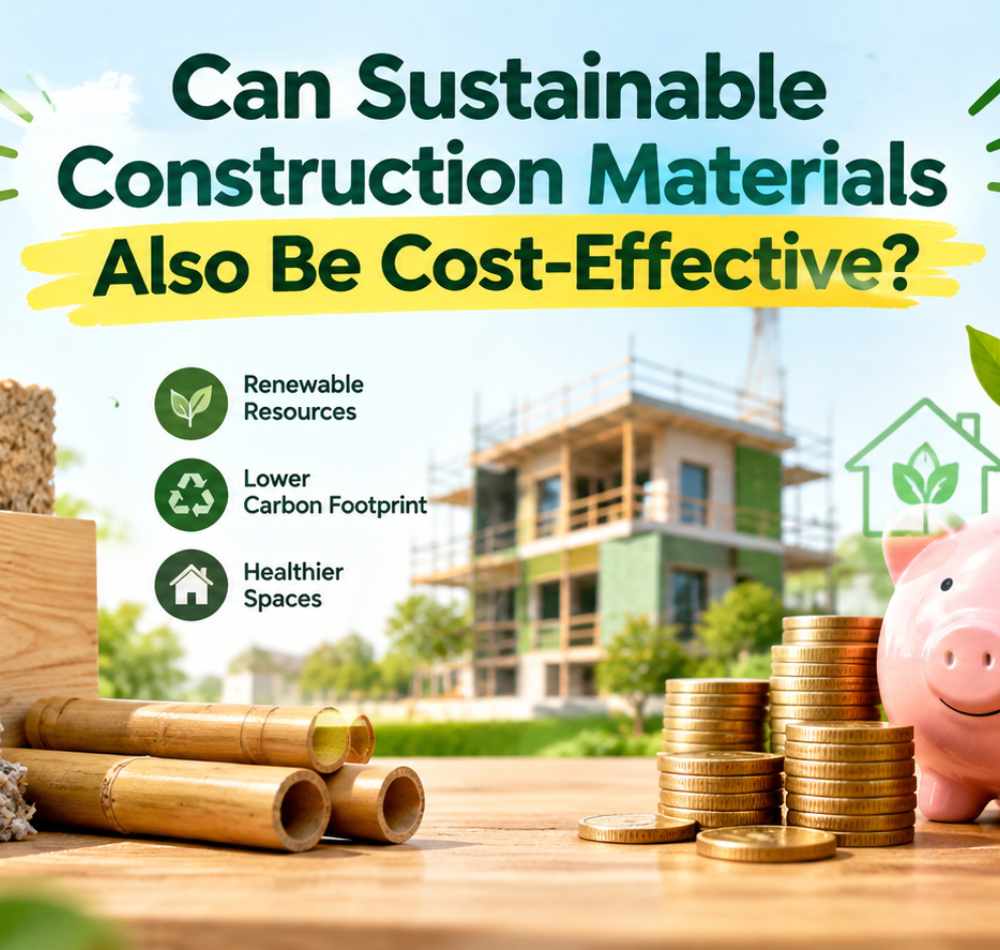
So, why do many in the construction industry still hesitate to embrace sustainability? One reason could be the common misconception that choosing sustainable products, including eco friendly construction materials in India, automatically means spending more money. We understand why this assumption is easy to make.
After all, a sustainable building material is manufactured using advanced tech and extensive R&D. Surely this would push its price through the roof. Right?
Well, not necessarily.
When buying a sustainable product, we would suggest considering its long-term value rather than the upfront cost. Only then will you realize just how cost-effective a sustainable building material can be for your project.
Prioritizing Value Over Cost
When you choose a sustainable material over its traditional counterpart, you are prioritizing value over cost. Let us explain.
Let’s say there are two materials in front of you. Material ABC costs you 50 bucks, whereas material XYZ (the sustainable alternative) costs you 60. Your instinct will tell you to go with the cheaper of the two. Congrats! You just saved yourselves 10 bucks… or did you?
What if Material ABC ends up producing more waste or needs maintenance work much sooner than anticipated?
Material XYZ, on the other hand, doesn’t produce waste and demands little to no repairs. You’d have saved yourself oodles of money by opting for this product over the one you chose.
The difference in quality between these two products is night and day. Sure, sustainable materials may cost you more, but they’ll only end up saving you a ton of money in the long term, as environmental benefits aren’t the only thing setting them apart. Sustainable materials are also known to offer practical benefits like reduced wastage and durability, as well.
Sustainable Doesn’t Necessarily Translate to Expensive
Let’s jump back to deciphering the common misconception that people have with regard to sustainable materials. Many people assume that sustainable materials are expensive by default. Dig deeper, and you’ll realize that this may not be the case, at least not all the time.
You’ll find sustainable products in the market that come with a premium price tag. That’s largely because their manufacturers rely on advanced technologies and specialized processes. Those aren’t the only kind of manufacturers you’ll find in the industry today.
There are others, like us at Magnus Ventures, that offer sustainable, eco-friendly building materials at a very competitive price.
We are able to do so by upcycling industrial waste. Instead of dumping tonnes of industrial waste that gets generated every single day in this country, we at Magnus Ventures have found a way to use it as an ingredient for our products like tile adhesives, plasters, and grouts.
Ultimately, what we have in store for you is a product that’s not only sustainable but also economical.
Durability is a Sustainable Material’s Strongest USP
We’ve already talked about the high-end quality of sustainable materials. A sustainable material brought from a reliable manufacturer will promise you impeccable durability. Take, for instance, the products manufactured and supplied by us.
Whether it is our grouts or tile adhesives, they exhibit several invaluable properties, starting from strong water resistance to exceptional bonding strength. Once applied, you won’t have to worry about redoing the installation, picking anything apart, or spending thousands on repairs.
Now, for argument’s sake, imagine the impact a poor-quality tile adhesive can have on your overall project.
Poor adhesive means weak adhesion. This weak adhesion will eventually lead to cracks and detachment. Think about the money you’ll have to spend just to fix this issue.
You’ll be spending money on removing tiles, buying more adhesives, hiring laborers, and purchasing replacements.
When you consider what investing in poor-quality materials will cost you, it makes sense to buy a high-quality alternative, even if it means paying more for it initially.
Sustainable Materials Cut Waste
Industrial waste is unavoidable during construction. That does not mean you can’t keep this waste under control. Sustainable materials promise better workability with superior efficiency. You can get the desired result by using them in less quantity.
Many manufacturers, like us at Magnus Ventures, provide products that are ready to use right out of the bag. This means you aren’t wasting time mixing the materials on-site. This also contributes to reduced wastage.
Every ounce of material wasted represents money lost. Therefore, one must consider reducing waste as much as possible; investing in a sustainable building material is just one way to accomplish this goal.
How You Can Evaluate a Product’s Cost-Effectiveness
It may not always be possible to test a sustainable’s material for what it’s worth before spending money on it. However, there are a few tips you can try to evaluate its cost-effectiveness.
- Price will be the first thing that’ll catch our attention about the product. We suggest you look beyond this price and consider other aspects. For example, consider how much installation will cost you or what you could possibly spend on repairs and maintenance down the line.
- Pay heed to the product’s specifications and unique features to truly assess its performance. Check whether it promises good bonding strength and resistance to weather, water, cracks, chemicals, and other sorts of stresses.
- Predict how much material your project will end up consuming over time. Even a cheaper material won’t appear cheap if you have to use a lot of it during construction.
- Consider how the product was manufactured. Whether it was made using upcycled industrial waste or manufactured via specialized processes.
- Understand how well the product will perform when applied on-site.
Why it is Wise to Adopt Sustainable Development Practices
Businesses today may have several reasons to take the path towards sustainability. Perhaps you want to meet certain environmental targets or get the much-coveted green building certifications.
Maybe you want to show your customers just how environmentally conscious your enterprise is. What businesses need to realize here is the undeniable fact that the benefits of sustainable development extend far beyond its impact on the environment.
Sustainable materials are known to reduce waste, require fewer repairs, require no maintenance work, and promise lasting performance. There is an obvious commercial benefit to using sustainable products for construction. Builders and engineers who opt for sustainable materials are hitting two birds with one stone.
Not only are they overcoming the dire environmental challenges of today, but also meeting construction-related challenges by using a reliable sustainable material.
Of course, one should not underestimate the value a good, reputable manufacturer can bring to the products you invest in. That is where Magnus Ventures comes into play.
We offer the largest selection of eco-friendly building materials conceived through extensive R&D.
If you are keen on purchasing top-notch sustainable building materials, we suggest you look no further than our catalog.